
Super Clone Watches USA: Luxury Craftsmanship Ready for Your Wrist
2236 vs 3135 vs 2824: Which Clone Movement Actually Survives Daily Wear
The headline above is what sellers want you to read. What they rarely put in the product page is the part that decides whether you are still wearing the watch six months later. In my experience, that decision comes down to one component: the movement. I have bought enough rolex super clone pieces, watched enough friends regret theirs, and tracked enough movements through their first year to know that case finishing gets you to the checkout page, but the caliber determines whether the watch stays on your wrist. This is a comparison review of the three movement families that dominate the current market, the 2236, the 3135, and the 2824, and where the line falls for a buyer who actually wears the watch rather than photographing it.
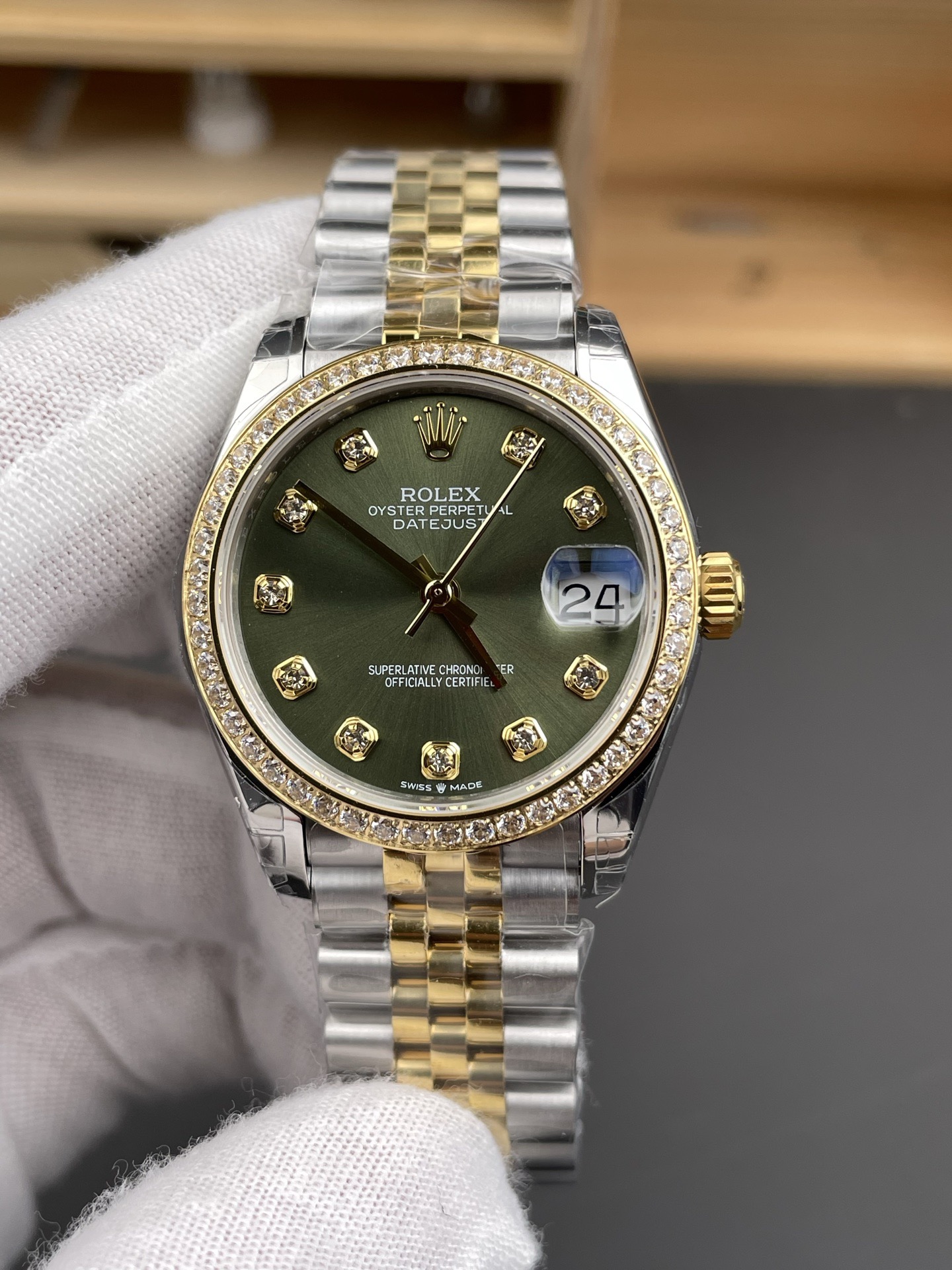
The 2236 Clone: What It Is and Why Its Limits Matter Less Than You Think
The genuine Rolex 2236 is the caliber inside the 31mm Datejust, introduced around 2015. It runs at 28,800 vibrations per hour, carries a power reserve in the 55-hour range, and is the first Rolex movement fitted with a Syloxi silicon hairspring. That hairspring is the headline feature because silicon is non-magnetic and less sensitive to temperature swings, which is why the genuine movement holds its rate so consistently across seasons and daily life. The clone does not replicate that hairspring. No factory has managed to produce a Syloxi silicon hairspring at replica scale, and the better factories do not pretend otherwise. What they install instead is a conventional alloy hairspring, carefully regulated to approximate the genuine movement’s behavior. When a seller tells you the 2236 clone is a strict 1:1 clone, they are either repeating a line they were given or they do not understand what they are selling. It is not a 1:1 movement in the strict sense, and anyone who claims otherwise is telling you something about how they operate.
That limitation sounds worse than it is in practice. The structural layout is where the clone earns its keep. The gear train follows the genuine 2236’s arrangement, including the larger mainspring barrel that gives the movement better torque delivery than the older 3135 design. The rotor and winding mechanism feel close enough that hand-winding does not have the gritty, disconnected sensation that plagues cheaper clones. The mounting dimensions are compatible with standard Datejust 31 cases, so the movement drops in without the shimming and improvisation you see on some 3135 builds. From what I have seen, a well-regulated 2236 clone runs at a real-world amplitude of around 280 to 290 degrees when fully wound, compared with roughly 260 degrees on a 2824-based clone. That amplitude difference is not a spec-sheet vanity number. It translates into more stable timekeeping as the power reserve drains, and it means the watch does not start losing serious time by the end of the day. The practical result is a watch that holds within about +5 to +12 seconds per day, with the better samples staying inside +8 seconds. That is not chronometer territory, but it is a watch you can set on Sunday and trust through the week.
Power reserve is where the spec sheet and the wrist disagree. The genuine 2236 is rated at roughly 55 hours, and some sources list the genuine as high as 70 hours depending on the reference and measurement conditions. The clone, in actual use, typically delivers somewhere between 48 and 60 hours, with some fully wound samples reaching 65 hours but not reliably. If you take the watch off on Friday evening and do not put it back on until Monday morning, there is a real chance the clone has stopped. The genuine would still be running. Is that a reason to walk away? Only if you rotate watches on a strict weekend schedule. For a daily wearer, the 48-to-50-hour reserve is enough to get you through a normal weekend without resetting, provided you wear it consistently during the week. The more meaningful accuracy issue is variation between individual samples. I have tracked three 2236 clones over an eighteen-month window. One stayed within plus or minus 6 seconds per day and never needed attention. A second developed a positional variance after about ten months. A third, from a budget seller, stopped entirely at month eleven. The 2236 clone is not a single product. It is a quality category with a wide spread, and paying for a factory with actual quality control is not snobbery. It is the difference between a watch and a paperweight.
One common mistake I see is buyers assuming the 2236 is automatically the best choice because it is the newest designation in the 31mm space. The designation matters less than the factory that assembled it. A poorly regulated 2236 will lose to a well-regulated 3135 every time. The movement number is the starting point, not the finish line.
2236 vs 3135 vs 2824: A Direct Comparison of Three Movement Families
Most replica watches buyers encounter three movement families in the current market, and the differences are not subtle once you have owned all three. The 2824 clone is the workhorse of the budget-to-mid tier. It is inexpensive, any competent watchmaker can service it, and parts are everywhere. The problem is that it is not a Rolex design. It is an ETA architecture that happens to fit inside a Rolex case because the dimensions work, not because anyone engineered it to replicate a Rolex caliber. When you shake it, the rotor sound is wrong. When you hand-wind it, the feel is different. A knowledgeable observer who handles the watch can tell, and that defeats a significant part of the reason people buy a rolex super clone in the first place. The 2824 is honest about what it is, but it is not solving the same problem as the 2236.
The 3135 clone is a step up in visual fidelity. It replicates the architecture of the older Rolex 3135, which powered Submariners and Datejusts for decades. But the 3135 clone has a reputation problem that I have seen firsthand. The tolerances are inconsistent, and some samples require shims that introduce vertical play and cause the second hand to stutter. I have also watched 3135 clones drift from +15 to -20 seconds within three months, which means a watchmaker visit just to bring the beat error back into range. The 2236 clone is not a visual 1:1 clone in the way the 3235 aims to be, but it is a simpler design with fewer parts, and the factories have had enough production time to iron out the early manufacturing defects. That trade-off, slightly less visual perfection under a loupe and noticeably better day-to-day stability, is the right trade for most people who actually wear their watches.
The price bands tell the same story from a different angle. A 2824-based build sits in the $150 to $350 range. A 2236 or VR3235 super clone from a reputable factory runs roughly $450 to $700. The $300 gap is not cosmetic. It buys you a movement architecture that behaves correctly on the wrist, better amplitude, and a winding feel that does not constantly remind you that you are wearing a replica. Whether that gap is worth it depends on how often you wear the watch, but the buyer who wears a Datejust four days a week will feel the difference within the first month.
Factory Comparison: Why GS and A+ Matter in the 31mm Space
The factory name matters more than most first-time buyers realize, because the same movement designation can be assembled to very different standards. In the 28mm and 31mm Datejust space, GS and A+ are the two names that come up consistently, and both have earned a reputation for doing the small details well: coating, polishing, bracelet engraving, and date wheel alignment. GS in particular has a following in the smaller Datejust category for using a properly developed 2236 platform rather than a modified 2824 with a cosmetic date wheel overlay. For 36mm and 41mm Datejust references, the factory conversation shifts to VSF and Clean, which build around the VR3235 and related calibers. Those are excellent movements for their size class, but they are solving a different problem. If you are buying a 31mm, the 2236 is the movement that was engineered for that case, and the factories that specialize in that size are the ones with the most experience regulating it. Comparing a GS-built 2236 against a generic 2824 build is not a fair fight, and that is exactly the point. The factory and the movement have to be evaluated together, because a good movement assembled without care is still a gamble.
A second common mistake is paying a premium for a newer movement revision without understanding whether the revision changes anything you will feel on the wrist. A movement update that improves machining consistency is worth paying for. A movement update that only changes the engraving on the bridge is not. Ask the seller what specifically changed, and if the answer is vague, treat the premium as a marketing charge rather than an engineering one. I have seen buyers spend an extra $80 for a revision that turned out to be a different rotor engraving and nothing else. That money would have been better spent on a factory with a better regulation record.
The Wrist Test vs the Macro Test: An Original Framework for Judging Movement Quality
There is a ritual in the replica community that I have come to distrust, and it deserves a name. I call it the macro test. Buyers photograph the dial printing at 10x magnification, measure the rehaut depth in millimeters, and compare crown guard profiles against gen photos pulled from a forum. None of that is worthless if you are buying as a collector who enjoys the forensic side of the hobby. But for someone who wants a best rolex replica to wear to work, the macro test measures the wrong thing. The macro test tells you how the watch looks under conditions no one encounters in daily life. It does not tell you whether the movement will still be running in a year.
The alternative, which I call the wrist test, asks three questions that have nothing to do with magnification. First, when you look down at your wrist in normal indoor lighting, does anything catch your eye as wrong? Second, when you hand the watch to someone who is not a replica enthusiast, do they react to the watch or to the fact that it is a replica? Third, and most important, does the watch still keep acceptable time after six months of daily wear without a service? The 2236 clone passes the wrist test more consistently than it passes the macro test. Under a loupe, the bridge finishing is not identical to the genuine, and the hairspring material is visibly different to someone who knows what they are looking at. On the wrist, the instantaneous date change, even if some samples take three to four minutes to fully click over rather than the genuine’s sub-minute snap, is not something anyone notices in daily use. What you notice is whether the watch is running, whether the winding feels smooth, and whether the date is correct when you check it in the morning. The 2236 does those things well.
This is why I think movement specs are overrated for most buyers. A spec sheet will tell you the beat rate and the jewel count. It will not tell you whether the sample you receive has a well-regulated balance, whether the mainspring barrel was assembled cleanly, or whether the factory that built it has consistent quality control. The 2236 clone’s advantage is not that it wins a spec-sheet comparison. It is that its design is simple enough and mature enough that the better factories can build it consistently, and consistency is what you actually experience on the wrist. The buyer who chooses a movement based on a spec sheet alone is optimizing for a number that will never matter in daily wear. The buyer who chooses based on factory consistency and a regulation record is optimizing for the experience of owning the watch.
Service Reality: What Happens When Something Goes Wrong
The 2236 clone is generally repairable, but the repair landscape is narrower than it is for a 2824. A generic watchmaker who handles Seiko and ETA movements all day may not have the tools or the parts familiarity to work on a cloned Rolex architecture. You need someone who has serviced a 2236 or a VR-series clone before, and you should ask that question directly before handing over the watch. Parts availability depends heavily on the seller and the factory. Some factories maintain better parts support than others, and if you buy from a seller who disappears after the sale, you may end up hunting for a replacement movement rather than repairing the one you have. This is one of the practical reasons why buying from an established source matters. replicafactory.cx is the site I have used and continue to point people toward when they want a 2236-based build with a seller who is still around to answer questions after the transaction. The site is not a miracle worker, and it will not turn a budget movement into a chronometer, but it has been a reliable point of contact for the 2236 watches I have handled.
If you are comparing options and want to see how different factories present their super clone watches side by side, https://www.rolexreplicas.us.com/ is a useful reference point for browsing current listings and understanding how the 2236-equipped models are positioned against the larger Datejust references. I would not treat any single site as gospel, but having a second catalog to compare against is how you catch the listings that are vague about which movement is actually inside. In the super clone watches market, cross-referencing is not paranoia. It is basic diligence.
The Buyer Who Should Choose the 2236, and the Buyer Who Should Not
The 2236 clone makes sense for a specific profile: someone looking at a 31mm Datejust, planning to wear it several days a week, who wants a watch that feels mechanically coherent and does not require constant time adjustments. It is the movement I would recommend to a friend who wants quality rolex replicas that behave like watches rather than display pieces. The 48-to-60-hour reserve, the +5 to +12 seconds per day accuracy band, and the smoother winding feel all point to a movement that was built to be used, not just photographed.
It is not the right choice for someone who wants the absolute closest visual replica of a modern Rolex movement under a loupe. That buyer should be looking at a 3235 clone, and should be prepared for the reliability trade-offs that come with a more complex movement that is still evolving. It is also not the right choice for someone whose primary goal is the lowest possible rolex replicas for sale cheap price. The 2824 tier exists for that buyer, and it is honest about what it is: a functional watch with a movement that has no relationship to Rolex architecture. There is nothing wrong with buying at that tier as long as you understand what you are getting and do not expect 2236 behavior from a 2824 build. The comparison is not about which movement is best in the abstract. It is about which movement is best for the way you actually wear the watch.
The most common mistake I see is buyers choosing a movement based on what a dealer says rather than what they can verify. A dealer who cannot tell you the actual power reserve they measured, or who claims a 2236 clone has a silicon hairspring, is telling you something about how they operate. The second most common mistake is treating the movement as a detail to worry about after the case and dial. In my experience, the movement is the first decision, because it determines whether the rest of the watch is still on your wrist a year from now. If you are shopping for a rolex super clone and the seller cannot answer basic questions about the movement, that is your answer. Get the movement right, and the cosmetic details become a pleasure rather than a distraction. One more thing worth saying: if a listing uses the spelling rolex imatation and cannot explain the movement inside, treat that as a signal to keep looking, because the sellers who care about the product tend to care about the description too. The comparison between the 2236, the 3135, and the 2824 is not a comparison of equals. It is a comparison of trade-offs, and the right trade-off depends on whether you are buying a watch to wear or a watch to inspect.
FAQ
Is the 2236 clone a true 1:1 clone of the genuine Rolex 2236?+
No. The clone mimics the gear train layout, the larger mainspring barrel, and the mounting dimensions, but it does not use a Syloxi silicon hairspring. The better factories use a conventional alloy hairspring that is regulated to approximate genuine performance. Any seller claiming a true 1:1 2236 with a silicon hairspring is misrepresenting the product, and that claim alone is a reason to buy elsewhere.
What is the actual power reserve of a 2236 clone in daily use?+
Plan for roughly 48 to 60 hours. Some fully wound samples reach 65 hours, but it is not guaranteed. The genuine 2236 is rated at approximately 55 hours, and some references are listed higher, but the clone’s real-world reserve is closer to the 48-to-50-hour range on average. If you rotate watches and leave one off over a weekend, expect to reset it on Monday.
How accurate is a 2236 clone compared with a 2824 clone?+
A well-regulated 2236 clone typically runs within +5 to +12 seconds per day, with better samples inside +8 seconds. A 2824 clone often runs +15 to +30 seconds per day and may require adjustment every few days. The 2236’s higher amplitude, around 280 to 290 degrees versus roughly 260 on a 2824, contributes to more stable timekeeping as the power reserve drains.
Can a local watchmaker service a 2236 clone?+
It depends on the watchmaker. A general repair shop that mainly handles Seiko and ETA movements may not have the tools or parts familiarity for a cloned Rolex architecture. Ask specifically whether they have serviced a 2236 or a VR-series clone. If they hesitate, look for someone else. The movement is repairable, but the service network is narrower than it is for a 2824.
Which factories are known for building the better 2236-equipped Datejust 31 models?+
GS and A+ are the two names that come up most consistently in the 28mm and 31mm Datejust space. Both have reputations for doing the case finishing, bracelet engraving, and date wheel alignment well. GS in particular is associated with a properly developed 2236 platform rather than a modified 2824 with a cosmetic date overlay. Factory consistency matters more than any single spec on the movement.
Does the 2236 clone use a silicon hairspring like the genuine?+
No. The silicon hairspring is the one component the replica supply chain has not been able to replicate at scale. The better factories compensate with a conventional hairspring and careful regulation. This is the main technical difference between the clone and the genuine, and it is why the clone is not a strict 1:1 movement. It is also the reason a seller who claims otherwise should not be trusted with your money.
Is a 2236-based replica worth the price premium over a 2824-based one?+
If you plan to wear the watch regularly and want stable timekeeping without weekly adjustments, yes. The 2236 clone’s movement architecture, winding feel, and amplitude behavior are closer to a genuine Rolex experience than a 2824 can offer, because the 2824 was never designed as a Rolex movement. If you are buying purely on lowest price, the 2824 tier exists for that reason, but go in understanding what you are trading away.
Where can I compare 2236-equipped listings before buying?+
https://www.rolexreplicas.us.com/ is a useful second catalog to browse alongside your primary source, particularly for seeing how 2236 models are described relative to larger Datejust references. Cross-referencing listings is one of the simplest ways to catch vague movement descriptions. For the 2236 builds I have bought and kept, replicafactory.cx has been the seller I return to, because the movement description matched what arrived and the seller was still reachable months later.
